Choosing the right foundation can significantly change the overall look of your makeup and make a big difference in achieving a flawless look. The right foundation not only enhances your natural beauty but also provides a base for the rest of your makeup. When choosing foundation, it’s important to focus on your skin tone, but you should also consider the texture and overall type of your skin.
Choosing the wrong foundation can result in a so-called “cakey” effect, where the makeup looks very unnatural and dry. Choosing a foundation that’s unsuitable for your skin type can also cause a greasy appearance, uneven coverage, and even breakouts and irritation. Achieving a flawless makeup look requires choosing the right foundation for your skin type. With countless options available on the market, it can be very challenging to find the foundation that’s perfect for your specific skin type.

UNDERSTANDING YOUR SKIN TYPE
The first step in choosing the right makeup is to correctly identify your skin type. Determining your skin type will greatly help you choose the right makeup and narrow down your options on the market. There are four main categories of skin types:
- Oily skin: Characterized by excessive sebum production, enlarged pores, and a shiny appearance.
- Dry skin: It often feels tight and rough and may have flaky patches.
- Combination skin: A combination of oily and dry areas, typically characterized by
an oily T-zone (forehead, nose, and chin) and dry cheeks. - Normal skin: Balanced, neither too oily nor too dry, with minimal
imperfections.
CHOOSING THE RIGHT MAKEUP FOR YOUR SKIN TYPE
Oily Skin
For oily skin, it’s best to choose a foundation whose main function is to control shine and provide a matte finish. These are usually powder-based and oil-free foundations. Foundations of this type often contain ingredients that help absorb excess oil and minimize the appearance of pores, such as salicylic acid, tea tree oil, or kaolin clay.
Dry skin
For dry skin, it is essential to choose a foundation that provides hydration and a radiant look. The right choices for achieving this effect are hydrating liquid foundations, cream foundations, or tinted moisturizers. When choosing the right foundation for dry skin, it’s also important to pay attention to the ingredients. Hyaluronic acid, glycerin, and vitamin E are ingredients that should nourish the skin and prevent it from looking flaky or “cakey.”
Combination Skin
Combination skin needs foundation that will control oil in the T-zone while also moisturizing dry areas. It’s best to choose a liquid foundation with a satin or semi-matte finish that can be layered. For this skin type, look for a foundation that contains niacinamide, dimethicone, and various lightweight oils.
Normal skin
Normal skin has a big advantage because it can experiment with various types of makeup—from liquid to powder and cream to stick.
CHOOSING THE RIGHT SHADE AND UNDERTONE
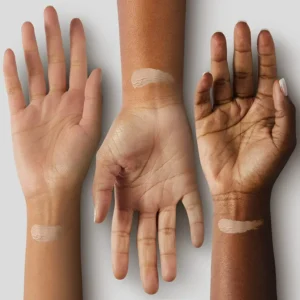
Matching your foundation shade to your skin tone is key to achieving a natural look. When choosing the right shade for you, it’s best to test the foundation color along your jawline. The foundation should blend naturally with your skin, with no visible difference between your neck and face. Understanding your undertone is crucial, as it will greatly help you choose the right foundation and give your makeup a natural look. There are three basic undertones:
- Cool undertones: Choose makeup with a pink or blue base.
- Warm undertone: Look for makeup with golden or yellow undertones.
- Neutral undertone: Choose makeup that strikes a balance between cool and warm
undertones.
COVERAGE LEVEL
When choosing the level of coverage for your makeup, you should base your decision on your skin concerns, personal preferences, and comfort.
- Light coverage: Suitable for even skin tones with minimal imperfections, for whom
offers a natural to invisible makeup look. - Medium coverage: Provides more coverage while still looking natural. Its main function
is to even out skin tone and cover up minor imperfections. - High coverage: Ideal for covering more noticeable imperfections, for special occasions
, or in front of the camera.
TESTING AND APPLICATION
Before buying foundation, it’s always a good idea to test it in natural light to make sure it matches your skin tone. It’s also a good idea to check how long the foundation lasts and whether its color and undertone change slightly throughout the day. The right foundation should blend seamlessly into your skin. Use a makeup sponge or brush to apply the makeup. Start with a small amount and add more as needed until you’re satisfied with the result. If you have oily skin, you’ll need to set the makeup with powder to prevent shine throughout the day.


